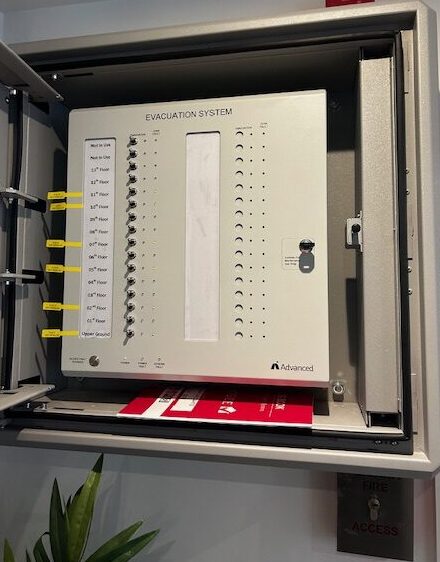
BS 5839-1:2025 came into effect on 30 April 2025 and replaced the 2017 edition, which has now been withdrawn. It is the British Standard for fire detection and alarm systems in non-domestic buildings, so if you own, manage or maintain a commercial building, it applies to you. This guide covers the changes that matter most, what they mean for your existing system and what you need to do next.
What BS 5839-1:2025 means for your building
This is a full revision, not a minor update. The clause numbers have changed, many definitions now match the latest fire safety vocabulary, and the standard puts more weight on supporting your evacuation strategy rather than simply detecting fire.
Does your existing system need upgrading?
No, not just because the standard has changed. A system designed and installed to the 2017 edition still meets the standard it was built to. The changes apply to new systems and to new work on existing ones. When you extend or modify your system, that new work must follow the 2025 edition, even if the rest of the system does not. Firmware updates to your panel now count as a modification too, so they need a certificate.
Where the changes will affect you first
For most building managers, the first changes you notice will be at your next service visit and in your paperwork. Servicing rules, false alarm investigation and logbook recording all changed, and those apply from day one. Design changes matter when you plan a new system, a refurbishment or a change of use.
Design changes in BS 5839-1:2025
If you are planning a new installation or a major upgrade, these are the design changes that will shape your system.
Smoke detection where people sleep
Heat detectors are no longer the default in rooms where people sleep, such as hotel rooms and staff accommodation. Calum Mansell IEng MIET, writing for the IET’s Wiring Matters in September 2025, explains that these rooms now need “smoke, multisensory or carbon monoxide fire detectors, unless a fire risk assessment justifies heat detection”. Category L2 systems also now treat stairway lobbies as needing automatic detection. Both changes only apply to new work, so your existing heat detectors stay compliant until the system is upgraded.
Call points, cables and covers
The rules on manual call point spacing are simpler. Nobody should have to travel more than 45 metres to reach one, or more than 30 metres in a straight line. Protective covers on call points should now be transparent. All fire alarm cables and the low voltage mains supply should share a single common colour, with red preferred, so nobody mistakes them for other services.
New rules on false alarms
False alarms are a major focus of the new edition. In the year ending March 2026, fire and rescue services in England attended 172,247 false alarms caused by fire alarm equipment, according to Home Office figures. BS 5839-1:2025 now puts clear responsibility on you to track and reduce yours.
When you must investigate
Every false alarm should now be investigated by the user, and your commissioning engineer should explain how to do this at handover. The standard also sets clear triggers. If your system has more than four false alarms per 100 detectors in a year, you need a preliminary investigation. On systems with more than 40 detectors, a rate above five per 100 detectors triggers an in depth investigation. A new annex shows exactly how to calculate your rate.
Faster signals to the alarm receiving centre
For the first time, the standard sets maximum times for alarm signals to reach your alarm receiving centre. Category L systems, designed to protect life, should get a fire signal through within 90 seconds. Category P systems, designed to protect property, have 120 seconds. This matters because traditional copper phone lines are being switched off by January 2027, and many older signalling devices rely on them. Your receiving centre should also hold full information about your premises, including whether people sleep there, so the fire service can decide how to respond. A new label near your panel reminds staff that the system connects to the fire service.
Changes to servicing and maintenance
These changes apply to every system from your next service onwards, whichever edition it was designed to.
A clearer six month service window
Servicing remains six monthly, but a visit now counts as on time if it falls between five and seven months after the last one, measured from the date your system was handed over. Each 12 month cycle now includes checking that the zones on your panel match your zone plan and testing any smoke detectors in ventilation ducts. If a fault cannot be repaired on the day, it must stay visible on the panel and never be hidden. Our guide on how often a fire alarm should be serviced covers each visit in detail.
Remote servicing and cyber security
Many modern panels can be accessed remotely. A new clause sets rules for this. Your communications equipment should be physically secured, for example in a locked cabinet. Every remote connection must be authenticated before it is accepted, a risk assessment must be done before any remote service, and the engineer must confirm your system is fully working afterwards.
Paperwork you now need
Good records protect you when an inspector or insurer asks questions. The 2025 edition tightens several documentation rules.
Cause and effect and your logbook
Every system now needs a cause and effect document explaining what happens when the alarm operates. For a simple building, one line such as “simultaneous evacuation” is enough. For a phased evacuation building, it will be a detailed matrix. Your logbook must now record every agreed variation from the standard, not just the major ones.
Variations that are no longer acceptable
Some departures from the standard are now considered too dangerous to agree to. You cannot agree to go without a zone plan, particularly in premises where people sleep. Residential care homes and supported housing with Grade A systems cannot go without a link to an alarm receiving centre. If your building relies on either variation today, plan to put it right.
What to do next
Your checklist
- Check your logbook records every agreed variation and every false alarm.
- Make sure you have an up to date zone plan beside your panel.
- Ask your maintenance company for a cause and effect document if you do not have one.
- Check how your system signals to your alarm receiving centre and whether it relies on a copper phone line.
- Work out your false alarm rate and investigate if it is above four per 100 detectors a year.
How we can help
Advantage Technical Services is BAFE SP203-1 accredited and works to BS 5839-1:2025 on every design, installation and service. We can review your system against the new edition, put your paperwork in order and plan any upgrades. See our commercial fire alarm services or get in touch to book a visit. You can also read the Fire Industry Association’s guide to the changes for the full technical detail.
Frequently asked questions
When did BS 5839-1:2025 come into effect?
It was published and came into effect on 30 April 2025. The 2017 edition has been withdrawn.
Do I have to upgrade my fire alarm to BS 5839-1:2025?
No. Your existing system remains compliant with the edition it was designed to. Any new extension or modification must follow the 2025 edition.
Are heat detectors still allowed in bedrooms?
Not as the default in new work. Rooms where people sleep now need smoke, multi sensor or carbon monoxide fire detectors unless your fire risk assessment justifies heat detection. Existing heat detectors do not need replacing because of the change.
Has the fire alarm service interval changed?
Servicing is still every six months, but a visit now counts as on time anywhere between five and seven months after the last one.
What counts as too many false alarms?
More than four false alarms per 100 detectors in a year triggers a preliminary investigation. On systems with more than 40 detectors, more than five per 100 triggers an in depth investigation.
What is a cause and effect document?
It explains what your system does when an alarm operates, such as which sounders activate and which doors release. Every system now needs one, from a single line for simple buildings to a full matrix for complex ones.

No responses yet