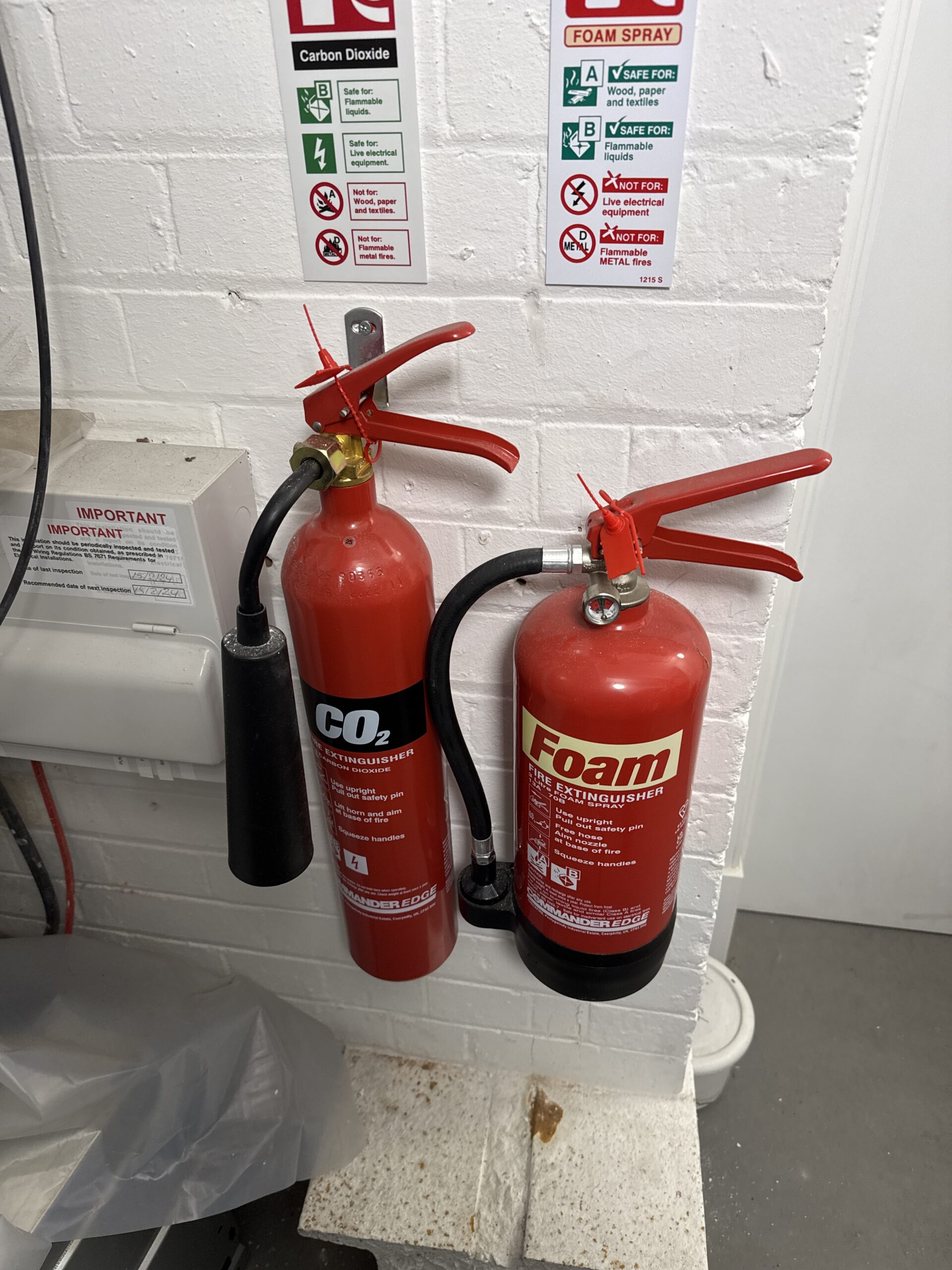
Every fire extinguisher in your building needs a quick check from you once a month and a professional service once a year. Every five or ten years, depending on the type, it also needs a deeper extended service or overhaul. That is the short answer. This guide explains where those rules come from, what each visit should include and how to tell whether the person servicing your extinguishers is actually competent.
Why fire extinguisher servicing matters
An extinguisher is the only firefighting tool you have in the minutes before the fire service arrives. If it has lost pressure, has a blocked hose or has corroded inside, it fails at the worst possible moment.
Workplace fires are rising and response times are slipping
Fire and rescue services in England attended 13,679 fires in non residential buildings in the year ending March 2026, up 3.7% on the year before, according to official government figures. The average response time to those fires was 9 minutes and 12 seconds, which is 36 seconds slower than five years ago. Overall, crews attended 641,227 incidents, the busiest year in a long time. Tristan Ashby, Chief Executive of the Fire and Rescue Services Association, said services are “responding to more incidents than at any point in recent years”. Nine minutes is a long time to wait. A working extinguisher in trained hands can stop a small fire becoming a large one.
What the law says
In England and Wales, Article 17 of the Regulatory Reform (Fire Safety) Order 2005 requires the responsible person to keep firefighting equipment maintained in efficient working order and good repair. Scotland and Northern Ireland have equivalent duties. The law does not set intervals. BS 5306-3:2017, the British Standard for commissioning and maintaining portable extinguishers, fills that gap. It is the benchmark fire inspectors and insurers use, so following it is how you show you have met your legal duty.
The BS 5306-3 servicing schedule
After commissioning, BS 5306-3 sets out four levels of service: basic service, extended service, recharge and overhaul. Which ones your extinguishers need, and when, depends on their type.
Service intervals by extinguisher type
| Extinguisher type | Monthly check | Basic service | Extended service or overhaul |
|---|---|---|---|
| Water, foam, water mist and wet chemical | You | Every 12 months | Extended service every 5 years |
| Powder | You | Every 12 months | Extended service every 5 years |
| Powder, primary sealed | You | Every 12 months | Extended service every 10 years |
| CO2 | You | Every 12 months | Overhaul every 10 years |
The annual basic service allows a month either way, so a visit between 11 and 13 months after the last one still counts. Extended service and overhaul intervals run from the date the extinguisher was commissioned, with a one year allowance from the date of manufacture if that comes first. Any extinguisher that has been used, even partly, needs recharging straight away.
When an extinguisher should be replaced
Your engineer will condemn an extinguisher that fails its extended service through internal corrosion, a damaged valve or a failed pressure test. Beyond that, plan to replace extinguishers at around 20 years old, because another extended service on a unit at the end of its life rarely makes sense. Many sites replace CO2 extinguishers at the ten year point instead of overhauling them, since a new unit often costs less than the overhaul.
Your monthly extinguisher check
Between professional visits, BS 5306-3 expects you or a nominated member of staff to inspect every extinguisher at least once a month. It takes a minute per extinguisher and needs no tools.
What to look for
- The extinguisher is in its proper place, clearly visible and not blocked by furniture, stock or bins.
- The safety pin and tamper seal are intact.
- The pressure gauge needle sits in the green zone.
- There is no visible damage, dents, corrosion or leaking.
- The hose and nozzle are clear and undamaged.
- The operating instructions face outwards and are easy to read.
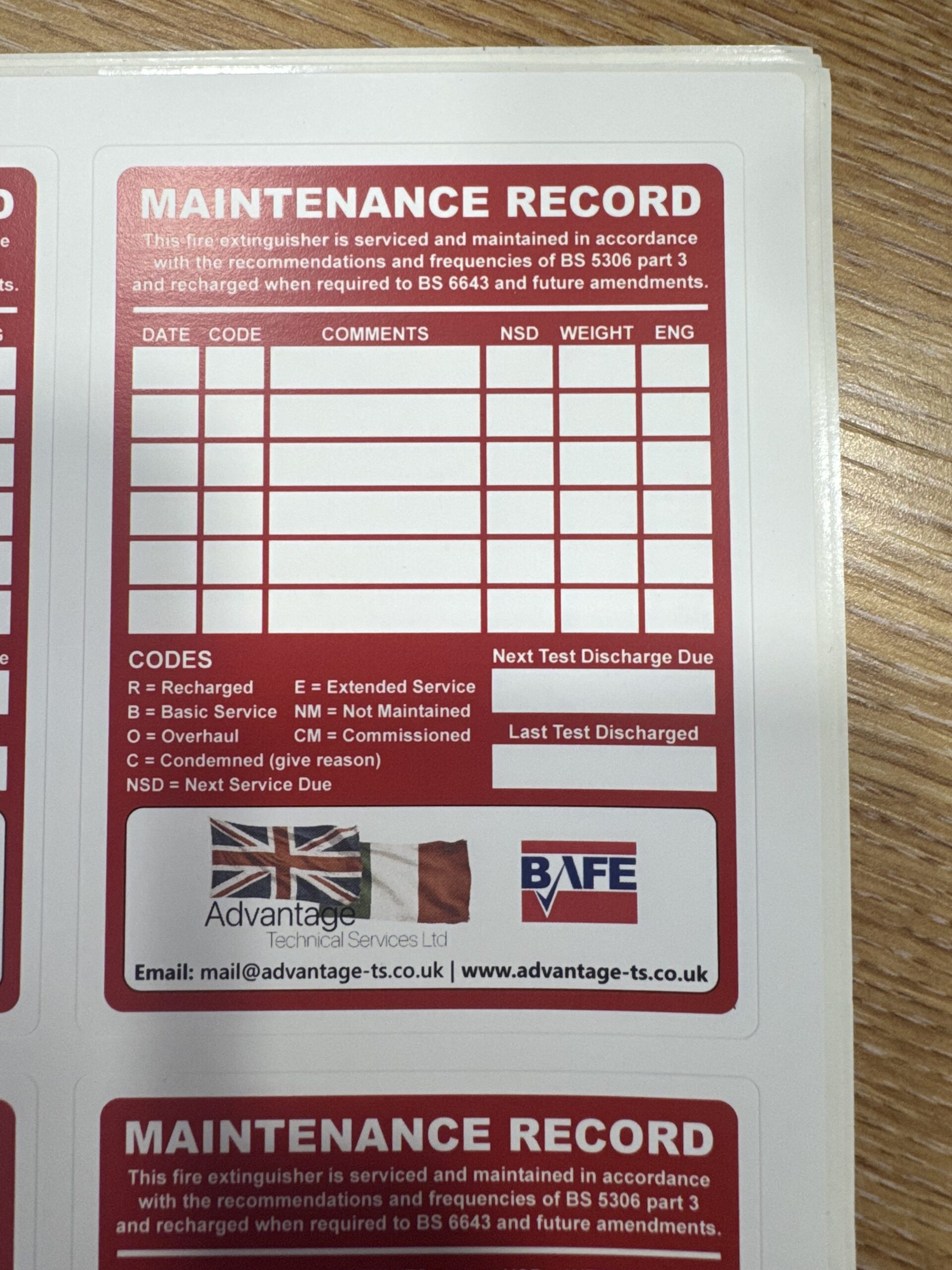
- The service label shows a visit within the last 12 months.
Keep a record
Write each check in your fire safety logbook, along with anything you found and what you did about it. Inspectors and insurers ask for this record after a fire. If you already log your weekly fire alarm tests, add your extinguisher checks to the same book so everything sits in one place.
What a professional service includes
A proper service goes well beyond wiping the cylinder and sticking on a new label. Here is what you should expect at each stage.
Commissioning and the annual basic service
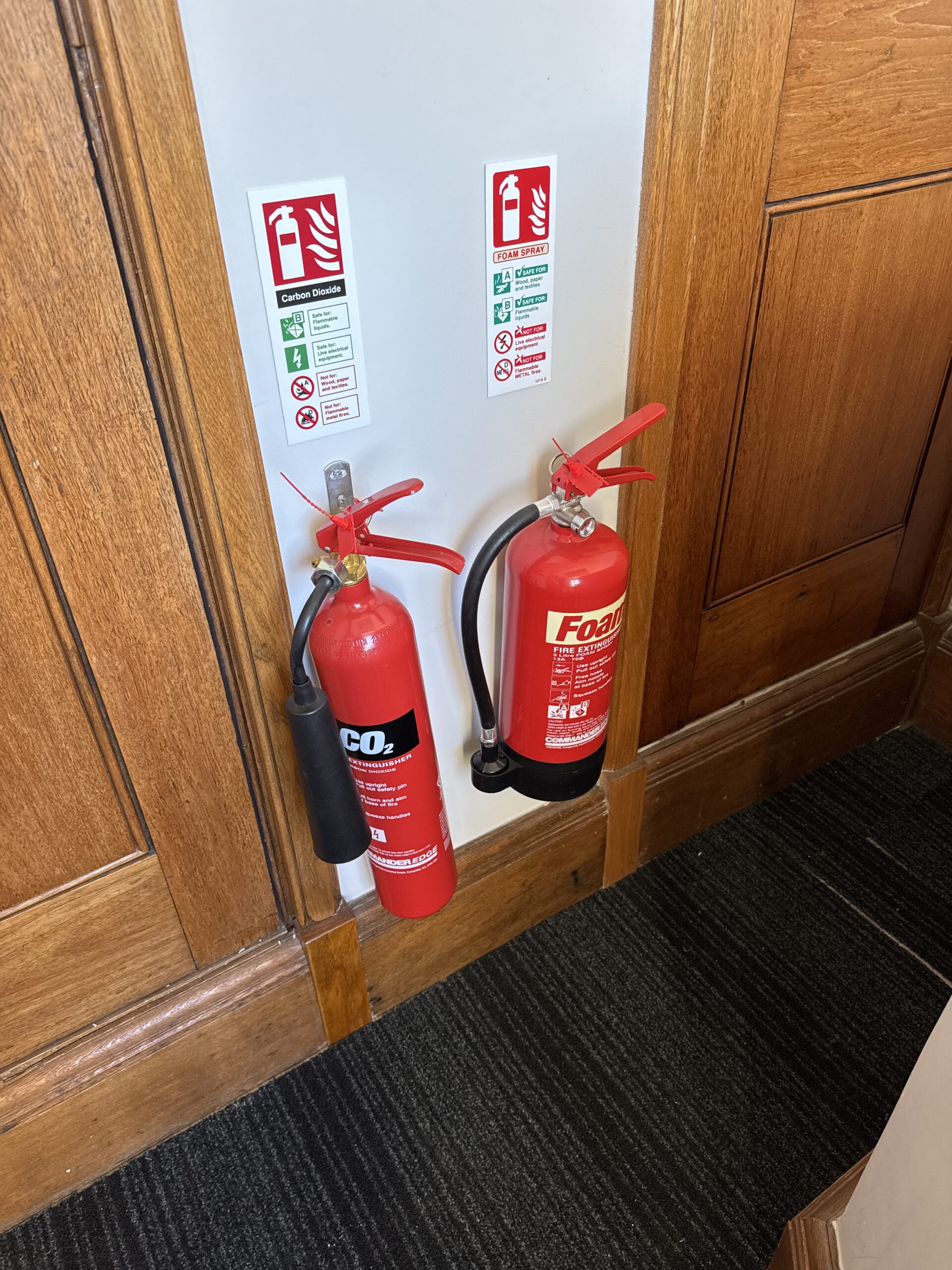
New extinguishers should be commissioned on site by a competent person before they go into service. Your engineer checks each unit for transit damage, confirms it suits the hazard, mounts it correctly and labels it. Extinguishers bought online and hung on a hook without commissioning do not meet the standard.
At the annual basic service your engineer weighs each extinguisher, checks its pressure, inspects the body, valve, hose and nozzle, and replaces the safety pin seal. They also check that the type and number of extinguishers still match the risks in your building, following BS 5306-8, and recommend changes if your layout or use has changed. You should receive a written report and every extinguisher should carry an updated service label.
Extended service and overhaul
The extended service is far more thorough. Your engineer fully discharges the extinguisher to prove it works, inspects the inside for corrosion, replaces worn seals and parts, then refills it with fresh extinguishing medium and repressurises it. CO2 extinguishers need an overhaul instead, which includes a hydraulic pressure test of the cylinder. That work usually happens off site, which is why so many CO2 units are replaced rather than overhauled.
Choosing who services your extinguishers
BS 5306-3 says extinguishers should be “maintained regularly by a competent person”. The duty to arrange that stays with you, so it pays to know what competent means.
What competent means
A competent extinguisher technician has completed formal training, gained on the job experience and passed a recognised BS 5306 exam. They carry the right tools, use manufacturer approved spares and have access to current technical data. BAFE SP101 is the third party certification scheme for extinguisher servicing, and checking the BAFE register is a simple way to confirm a company’s credentials. Ask any provider to show you their technicians’ training and exam certificates before they start.
One provider for your fire safety maintenance
Advantage Technical Services supplies, commissions and maintains fire extinguishers to BS 5306-3 alongside our BAFE SP203-1 accredited commercial fire alarm servicing. Bringing both under one maintenance plan means one visit schedule, one set of paperwork and automatic reminders before anything falls due. Get in touch to book a service or to take over maintenance of your existing extinguishers.
Frequently asked questions
How often do fire extinguishers need servicing?
A basic service by a competent person every 12 months, plus a monthly visual check by you. Most types also need an extended service every five years. Primary sealed powder extinguishers need one every ten years and CO2 extinguishers need an overhaul every ten years.
Is fire extinguisher servicing a legal requirement?
Yes. The Regulatory Reform (Fire Safety) Order 2005 requires firefighting equipment to be kept in efficient working order. BS 5306-3 is the recognised standard for how to do that, and it is what inspectors and insurers check against.
Can I service my own fire extinguishers?
You should carry out the monthly visual check yourself. The annual service, extended service, recharge and overhaul must be done by a trained and competent technician with the correct equipment.
How long does a fire extinguisher last?
With correct servicing, most extinguishers last up to 20 years. Any unit that fails an extended service or overhaul must be replaced straight away, and many CO2 extinguishers are replaced at ten years because that costs less than an overhaul.
Do fire extinguishers in my home need servicing?
Single private homes fall outside the Fire Safety Order, so there is no legal duty. Check the gauge and seal regularly and follow the manufacturer’s advice. Communal areas of flats and HMOs are covered by the Order, so extinguishers there need servicing in the same way as a workplace.
Is BS 5306-3 being updated?
BSI opened a revision project in 2024 to correct problems with the test procedures and address environmental impact. Until a new edition is published, BS 5306-3:2017 remains the current standard. We will update this guide when the new edition arrives.

No responses yet